Multilingual Patient Calls: 43-Language AI Phone System
Contents
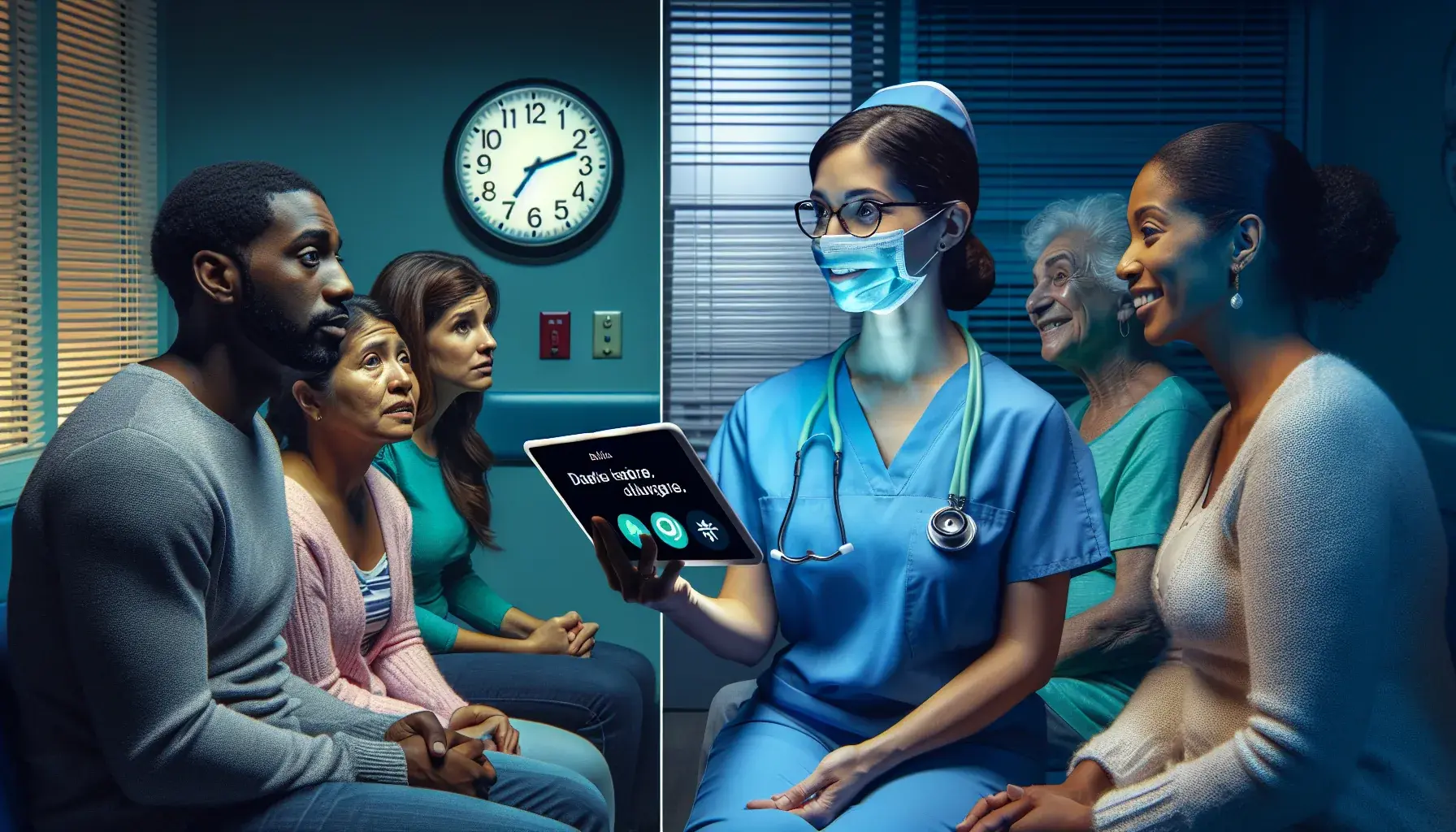
More than 25 million people in the United States have limited English proficiency, and that number grows by roughly 500,000 every year. For medical practices, language barriers are not an inconvenience to manage around — they are a clinical safety issue. Miscommunicated medication dosages, imprecise symptom descriptions, and follow-up instructions that never land in the patient's native language lead to preventable adverse events, unnecessary ER visits, and malpractice exposure. The practices that solve this problem do not just check a compliance box. They unlock better outcomes, stronger retention, and growth into communities that other providers cannot effectively serve.
The question is no longer whether multilingual communication matters. It is how to deliver it at every patient touchpoint — phone calls, scheduling, reminders, after-hours triage — without adding headcount or slowing your front desk down. That is the problem CallMyDoc was built to solve: clinical communication infrastructure that handles 43 languages automatically, so your staff works in English while every patient hears their own language.
Quick Answer: Multilingual AI patient communication allows non-English speaking patients to schedule appointments, receive reminders, and ask clinical questions in their preferred language without an interpreter. CallMyDoc supports 43 languages, satisfying Section 1557 language access requirements for federally-funded ambulatory practices.
The Clinical Impact of Language Barriers
Language barriers do not create minor inconveniences. They create clinical risk at every stage of the patient encounter.
Medication Errors
A patient who does not fully understand discharge instructions may take twice the prescribed dose of a blood thinner, crush a sustained-release tablet that should be swallowed whole, or stop an antibiotic course early because they misunderstood "take until finished." These are not hypothetical scenarios — LEP (limited English proficiency) patients experience a 49% higher rate of adverse events stemming from communication failures compared to English-speaking patients.
Imprecise Symptom Descriptions
When a patient cannot describe radiating chest pain, distinguish between sharp and dull sensations, or explain the timeline of their symptoms, providers work with incomplete information. Diagnostic accuracy drops. More tests get ordered, costs rise, treatment gets delayed, and the schedule backs up behind every language-mismatched encounter.
Lost Follow-Up Instructions
Post-visit care depends on the patient understanding what to do next — when to take medications, when to return, what symptoms warrant an ER visit. When those instructions arrive in a language the patient does not fully comprehend, adherence plummets. The result is repeated visits, preventable ER utilization, and worse chronic disease outcomes. CallMyDoc eliminates this gap by ensuring that every communication — from the initial call to automated follow-up reminders — reaches the patient in the language they actually understand.
Title VI and Section 1557: What Your Practice Legally Must Provide
Many practice managers treat language access as a courtesy. Federal law treats it as a requirement.
Title VI of the Civil Rights Act applies to any healthcare provider that receives federal funding — which includes every practice that accepts Medicare or Medicaid. It requires "meaningful access" for individuals with limited English proficiency. The Department of Health and Human Services interprets this broadly: it covers not just clinical encounters but every patient-facing communication, including scheduling calls, appointment reminders, billing inquiries, and after-hours triage.
Section 1557 of the Affordable Care Act extended these requirements further. Practices with 15 or more employees must post notices of language assistance in the top 15 languages spoken in their state — and must actually deliver that assistance, not just offer it on paper.
The Documentation Burden
Compliance does not end with providing access. You need to document that access was provided and that records exist in case of audit or litigation. Practices using ad-hoc interpretation — a bilingual medical assistant translating informally, a family member relaying information — have no documentation trail. If a complaint is filed or an adverse event occurs, the practice cannot demonstrate that meaningful access was provided.
CallMyDoc automatically generates timestamped transcriptions in both languages for every interaction, stored directly in your EHR through integrations with athenahealth, Altera TouchWorks, and Veradigm Professional. This creates the compliance documentation your practice needs without any additional effort from your staff. Every interaction is HIPAA compliant, with end-to-end encryption — the same security standards applied across all 29 million-plus patient calls the platform has handled with zero data breaches.
The Economics: How Language Barriers Increase Your Costs
Language barriers are not just a quality-of-care issue — they are a financial issue that shows up in line items most practice managers do not connect to communication failures.
- Repeated visits for unresolved conditions: When a patient does not understand their treatment plan, they return — often multiple times — for the same issue. Each visit consumes a slot that could serve a new patient, and each repeat encounter is less likely to be reimbursed at full value.
- Emergency department utilization: LEP patients use emergency departments at significantly higher rates for conditions that could have been managed in a primary care setting — if only they had understood their provider's instructions or been able to call in for guidance.
- Longer visits and lower throughput: Communicating through an interpreter or struggling through a language-mismatched encounter takes two to three times longer than a same-language interaction. Multiply that by several LEP patients per day and the impact on daily patient volume is substantial.
- Malpractice exposure: Communication failures are cited in over 30% of malpractice claims. When a practice cannot document that a patient understood their care instructions, the legal exposure increases significantly.
- No-show revenue loss: Patients who receive scheduling confirmations and reminders in a language they do not understand miss appointments at higher rates. Each no-show represents lost revenue and a wasted time slot.
CallMyDoc's flat-rate pricing model means your costs stay predictable whether you handle 100 calls per month or 34,000 — and the platform pays for itself by reducing the hidden costs that language barriers create. There are no per-call charges, no per-language surcharges, and no interpreter service contracts to manage.
Why Bilingual Staff Alone Is Not the Solution
Hiring bilingual staff is the most common first response to language diversity, and it helps — up to a point. But relying on bilingual employees as your primary language access strategy creates problems that compound over time.
Bottleneck creation. When every Spanish-speaking patient routes to the same bilingual front-desk employee, that person becomes a choke point — pulled from their primary responsibilities, extending hold times for everyone.
Burnout and turnover. Staff informally designated as the office translator carry a heavier cognitive load than their peers. Faster burnout, higher turnover — and when they leave, the practice has no backup.
Limited language coverage. A bilingual hire covers one additional language, occasionally two. But a practice in Houston may have patients who speak Spanish, Vietnamese, Mandarin, Arabic, and Urdu. One or two bilingual hires cannot cover this range.
No after-hours coverage. Bilingual staff go home at 5 PM. With CallMyDoc's after-hours answering, multilingual coverage runs 24/7/365 — no staffing changes required.
How Real-Time AI Translation Works Differently
Traditional interpreter phone lines follow a three-party relay model: your staff calls the language line, waits one to five minutes for an interpreter, then conducts a conversation where every sentence is repeated twice. A two-minute scheduling call becomes ten minutes. Clinical nuance gets filtered through a third party who may lack medical terminology training.
CallMyDoc works fundamentally differently. No hold time, no third-party relay, no per-minute billing.
- Automatic language detection: CallMyDoc identifies the language being spoken and responds immediately — the patient never has to request translation or press a number.
- Direct AI translation: The patient speaks naturally in their own language. CallMyDoc translates, transcribes, and delivers the message to your staff in English. No interpreter in between, no delay.
- Automatic documentation in both languages: Every exchange is transcribed and stored in both languages, creating a bilingual record that flows directly into your EHR. Traditional interpreter lines provide no documentation.
- 43 languages, zero configuration: Spanish, Mandarin, Vietnamese, Arabic, Tagalog, Korean, Russian, Haitian Creole, Portuguese, and 34 more — available instantly.
CallMyDoc does not just pick up the phone — it understands the patient, translates the interaction, documents everything, and delivers actionable information to your staff in English.
The No-Show Connection: Language-Matched Reminders Change Attendance
No-shows cost the average practice tens of thousands of dollars annually. For LEP patients, no-show rates are disproportionately higher — not because these patients do not value their appointments, but because the reminders they receive are in a language they cannot understand.
An appointment reminder in English to a patient who speaks primarily Mandarin is not a reminder. It is noise. The patient misses the appointment, the time slot goes unfilled, and the practice absorbs the loss.
CallMyDoc's automated dual-reminder system delivers confirmations and reminders in the patient's preferred language. Patients can confirm, cancel, or reschedule in under 40 seconds, in their own language, without calling the office. The AI-based self-scheduling (currently available for athenahealth practices) works across all 43 supported languages, eliminating the language barrier from the entire scheduling workflow. When patients understand the reminder, they show up.
Growing Into New Communities
For practices looking to grow, multilingual capability is not just an operational improvement — it is a market expansion strategy.
Underserved communities with high LEP populations represent significant unmet demand. These patients need primary care, chronic disease management, and preventive services — and they have insurance through Medicare, Medicaid, and marketplace plans. But they will not come to a practice that cannot communicate with them.
When your practice can handle calls in 43 languages from day one — during business hours and after hours — you can serve communities that your competitors cannot effectively reach. The communication infrastructure handles the language complexity while your clinical staff focuses on delivering care.
Real-World Results Across Practice Sizes
CallMyDoc serves practices across 44 states plus DC and the US Virgin Islands, from two-physician family practices to enterprise health networks. The multilingual capability works identically at every scale.
Castle Hills Family Practice — San Antonio, Texas
Castle Hills Family Practice handles 5,222 monthly calls across six dashboards in San Antonio — one of the most heavily bilingual metros in the country. They reduced phone-related workload by 50%, with after-hours calls handled three times faster and documentation flowing automatically into athenahealth. Their practice manager noted: "Calls are documented, staff aren't overwhelmed, and patients get the fast response they deserve."
Hudson Headwaters Health Network — New York
Hudson Headwaters operates 89 offices across New York, serving rural and diverse communities. With 7,532 monthly calls, they resolve 47% of business-hour calls automatically and handle urgent after-hours calls within minutes. Having every call handled in the patient's preferred language — without adding interpreter staff at 89 locations — fundamentally changed their operational model. Nursing staff now focuses on bedside care instead of phone triage.
a large multi-site physician group (200+ locations, FL) — Florida
Large Multi-Site Physician Group (FL), with 900-plus providers across 200-plus locations in linguistically diverse Florida, has processed over 4.1 million calls through CallMyDoc. They resolve 52.1% of routine daytime requests within 1.8 hours and handle urgent after-hours calls three times faster. Across 1,354 dashboards serving patients who speak Spanish, Haitian Creole, Portuguese, Vietnamese, and dozens more, consistent multilingual communication is not optional — it is operational infrastructure.
What Implementation Looks Like for Your Staff on Day One
One of the most common concerns practice managers raise is: "What changes for my staff?" The answer is: almost nothing.
CallMyDoc is designed so that the language complexity is entirely invisible to your team. Here is what day one actually looks like:
- Your staff sees everything in English. Call transcripts, patient requests, scheduling changes, refill requests, triage notes — all delivered in English, regardless of what language the patient spoke.
- No new software to learn. CallMyDoc integrates directly with your existing EHR. Documentation appears in the same workflows your staff already uses — no separate portal, no additional login.
- No language selection required. Your staff does not need to identify what language a patient speaks or route calls to a bilingual employee. The system detects the language automatically.
- No workflow disruption. Incoming calls are handled, translated, transcribed, documented, and routed exactly the way English calls are. The only difference is that the patient had the conversation in Vietnamese or Arabic or Spanish — and your staff never had to know.
Setup is included at no extra cost. There are no per-call charges regardless of language, and no long-term contracts. Practice analytics let you track call volumes, resolution rates, and language distribution across your entire operation from a single dashboard.
Clinical Communication Infrastructure, Not an AI Receptionist
There is a meaningful difference between a tool that picks up the phone and a system that manages clinical communication across languages, time zones, and care settings. CallMyDoc is the latter. It handles daytime call management, after-hours answering, self-scheduling, automated reminders, multilingual translation, EHR documentation, and analytics — all within a single HIPAA-compliant platform that has handled over 29 million calls across 44 states plus DC and the US Virgin Islands with zero security breaches.
For practices serving diverse patient populations, the ability to communicate effectively in 43 languages is not a feature. It is the foundation of equitable, compliant, and financially sustainable care.
Related Articles
- Section 1557 Compliance Guide (2026)
- Patient Call Patterns: What 29 million Calls Reveal About Healthcare Communication
- What Is a Patient Communication Platform?
- The 7 Biggest Issues in Healthcare Right Now
- HIPAA Compliance in the Cloud Era
- Best Software to Improve Patient Experience in 2026
- Hudson Headwaters Case Study: 89 Offices, 47% Auto
Explore by Specialty
Request a live demo to see how CallMyDoc's multilingual communication infrastructure works with your existing systems — and what it means for your patients, your staff, and your bottom line.