The 65+ Make 44% of Patient Calls — and Self-Schedule Least
Contents
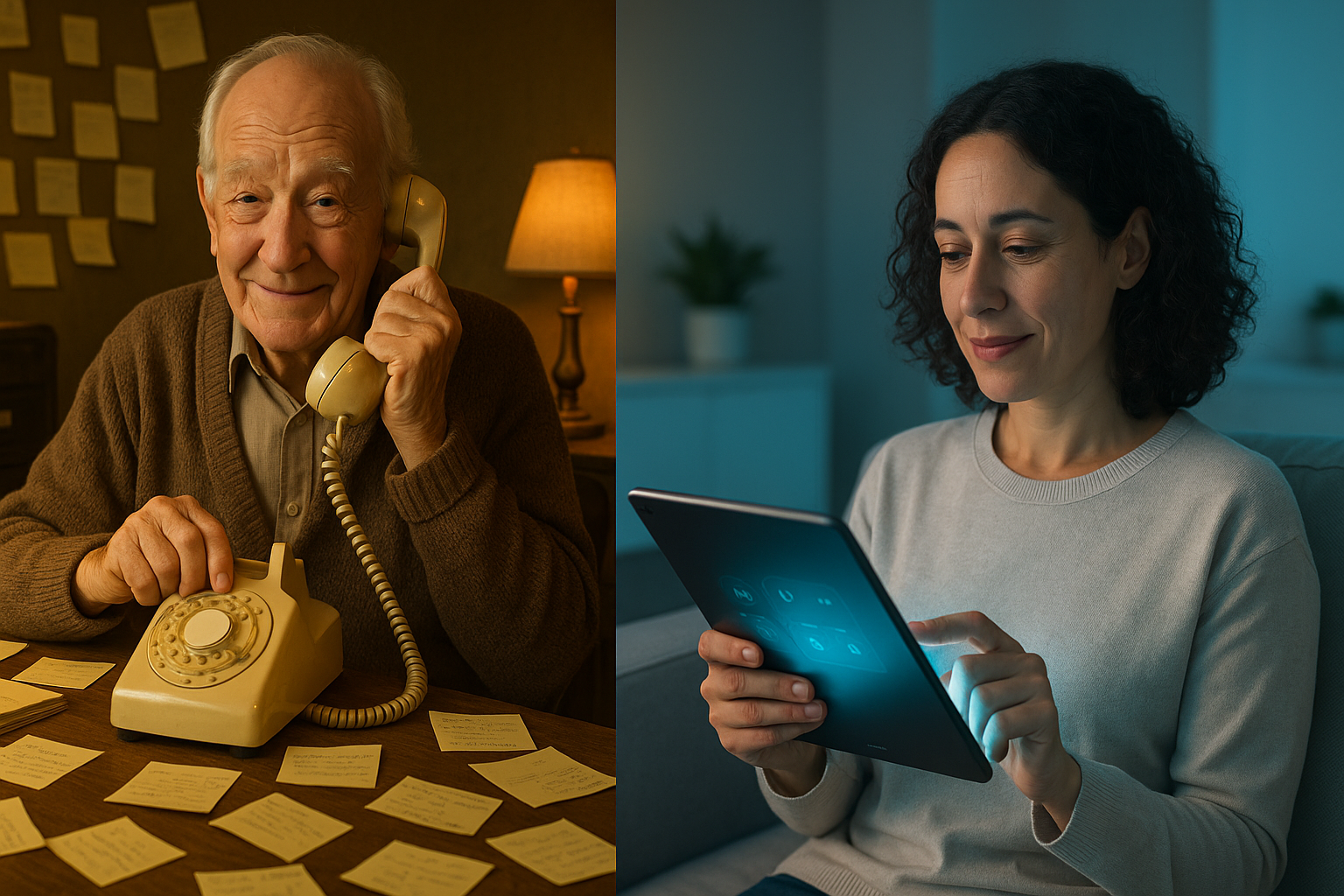
Quick Answer: Across 2.5 million recent patient calls, 43.7% came from patients aged 65 or older and 67.6% from patients 50+ — more than one in five callers (21.7%) were 75 or older. Yet these same older patients self-schedule the least: patients 65+ self-scheduled at about half the rate of patients in their late 30s and 40s (8.0% vs 15.6%). The phone is overwhelmingly an older-patient channel, and the "just push everyone to the portal" strategy structurally misses the majority of the people actually calling.
Walk into almost any healthcare strategy meeting in 2026 and you will hear some version of "we need to push patients to the portal." The digital front door. Self-service. Deflect the phone. The assumption underneath it is that patients want to handle everything online, and the phone is a legacy channel slowly fading away.
Our broader analysis of patient calls already flagged that callers skew older and tend to prefer the phone over portals. This piece drills into exactly how far that goes — using patients' real dates of birth rather than estimates — and surfaces a pattern that should change how practices think about access: the patients who call the most are the ones least willing to self-serve online.
We looked at 2.5 million recent patient calls across 4,013 medical offices, computing each caller's age from the date of birth on record (aggregated into bands; no individual data leaves our systems). Two questions: who is actually calling, and do they behave the way the digital-first playbook assumes?
The phone is an older-patient channel — overwhelmingly
Here is the age breakdown of who calls:
- 65 and older: 43.7% of all calls
- 50–64: 23.9%
- 35–49: 15.1%
- 18–34: 13.0%
- 0–17: 4.3%
Put together, more than two-thirds of patient calls (67.6%) come from patients 50 and older, and more than one in five callers (21.7%) are 75 or older. The under-35 crowd — the demographic the digital-front-door strategy is implicitly built for — accounts for only about 13% of call volume. Because these figures come from real birthdates on millions of calls rather than a sample, they are about as solid as a demographic read on patient phone behavior gets.
This is not a small skew. The single largest age group calling your office, by a wide margin, is patients of Medicare age and above. If your operational strategy quietly assumes the caller is a 32-year-old who would happily use an app if you nudged them hard enough, it is built for the wrong patient.
The counterintuitive part: the biggest callers self-serve the least
You might assume older patients call more simply because they have more health needs — but that they would shift to self-service if offered it. The data does not support that hope. When we look at who actually uses self-scheduling when it is available, the rate falls as age rises:
- Ages 35–49: 15.6% self-scheduled
- Ages 18–34: 15.3%
- Ages 50–64: 11.8%
- Ages 65+: 8.0%
So the patients who make up nearly 44% of your call volume self-schedule at roughly half the rate of patients in their late 30s and 40s. The group that calls the most is the group least likely to take the digital off-ramp. And the gap is not subtle — it is nearly 2× between the youngest adults and the oldest.
Stack the two findings together and the implication is uncomfortable for the prevailing strategy: a "deflect-to-digital" approach optimizes for the ~13% of callers under 35 while the ~44% who are 65+ keep calling a front desk that has been told to do more with less. Pushing harder on the portal does not convert the majority; it mostly leaves them on hold longer, because the one channel they will reliably use — the phone — is the one being starved of investment.
Why this happens (and why it won't change soon)
None of this is a knock on older patients. The reasons are structural and durable:
- Portals require a standing account. Every login, password reset, and app update is a point of failure, and it is a steeper barrier for patients who did not grow up with smartphones.
- Complexity favors a conversation. Patients managing multiple conditions, multiple medications, and multiple specialists often have a question that does not fit neatly into a portal form — so they call.
- The phone is universal. Every patient, regardless of age, tech comfort, or home internet, already knows how to use it. No onboarding required.
The demographics are not moving in the digital-first direction either. The 65+ share of the U.S. population is growing, not shrinking. For most practices, the phone is going to remain the dominant patient-contact channel for the foreseeable future — not because the practice failed to digitize, but because that is what the majority of their patients choose.
What this means for how you staff and automate
The takeaway is not "abandon the portal." Portals are genuinely useful for the motivated, tech-comfortable minority who use them, and that is real volume worth capturing. The takeaway is that a portal-only access strategy leaves the majority of your patients unserved, and the lever that actually scales access for the people who call is automating the phone itself — not redirecting them away from it.
Concretely, that means measuring access by what happens on the phone line, not just portal-adoption dashboards: how many calls are answered, how fast, how many are resolved without a hold, and how many routine requests (scheduling, refills, confirmations) could be handled automatically so staff are free for the calls that genuinely need a person.
That is the gap CallMyDoc is built to close. It automates routine patient calls on the channel older patients actually use — booking appointments, handling refills, taking messages, and routing what needs a human — during the day, after hours, and across multi-site call centers. The same patient who would never log into a portal can call, identify themselves with their date of birth, and book an appointment in under a minute. It meets the 44% where they already are instead of asking them to become someone they are not. For why phone-based booking reaches patients a portal cannot, see what the research shows about patient self-scheduling, or see how the patient call platform works.
Before you invest in another campaign to push patients to a portal most of them will not use, it is worth asking a sharper question: who is actually calling, and are we serving them on the channel they have already chosen? Book a demo → to see it running against your own call volume.
Methodology
Figures are drawn from an analysis of 2,486,996 patient calls placed in the most recent ~12 months across 4,013 medical offices on the CallMyDoc platform — the subset of recent calls with a recorded patient date of birth (roughly half of all calls; the remainder are largely provider-to-provider, pharmacy, and other non-patient calls that carry no patient birthdate). Age was computed from date of birth at the time of the call and aggregated into bands; no individual patient data is published. Self-scheduling rates reflect the share of calls in each age band that involved a patient self-scheduling action. These figures are part of CallMyDoc's ongoing analysis of more than 29 million patient call sessions across 44 states plus DC and the US Virgin Islands.